
Heritage Series
Born from the Board Tracker
Before motorcycles were transport, they were weapons of speed. The Greaser inherits that spirit.
In the first decades of the twentieth century, before motorcycle racing found its home on paved circuits and manicured tracks, it lived on wooden ovals — steep, rough, and dangerous in a way that seems almost incomprehensible today. The board tracks were built from two-by-four planks nailed together in massive banking curves, sometimes as steep as sixty degrees. The machines that raced on them had no brakes. They barely had suspension. They had engines, frames, and riders willing to push both to the limit.
This was board track racing, and it was the first great chapter of American motorcycle culture. At its peak in the 1910s and 1920s, it drew crowds of tens of thousands to venues across the country. Riders became celebrities. Manufacturers built machines specifically optimized for the oval — stripped of everything unnecessary, shaped for speed and nothing else. The result was a design language so pure and so honest that it has never been surpassed.
The silhouette of a board tracker is unmistakable. Long and low, the tank sweeping back in a teardrop arc from headstock to seat. The engine exposed and central, defining the architecture of the whole machine. No mudguards, no lights, no concessions to comfort or practicality. These were machines made to go fast on a specific surface, and every design decision reflected that singular purpose. They looked dangerous because they were.
By the late 1920s, the era was ending. Insurance costs were climbing. Riders were dying. Road racing was emerging as a safer and more commercially viable alternative. The wooden ovals were torn down, the machines retired to barns and garages. But the design DNA of the board tracker didn't disappear — it spread. You can trace a direct line from those stripped racers through the café racer movement of the 1950s, through every custom chopper built in the following decades, to the modern custom motorcycle scene that remains one of the most vital subcultures in design today.
The Greaser is a direct descendant of that lineage. The proportions — the long tank, the low stance, the exposed mechanicals, the teardrop headlight — all trace back to those board track machines. The rebellious spirit is the same, even if the engine is now electric and the roads are paved. The Greaser captures something that was authentic the first time, and that authenticity translates across a century without losing anything essential.
Every Greaser ships with Shimano 7-speed gearing, Tektro hydraulic brakes, and a Bafang motor that delivers the kind of torque those original board trackers would have envied. The 3-year frame warranty means you can ride with the same confidence those early racers rode — though, thankfully, the consequences of a breakdown are considerably less severe.
From the Archives
The machines that started it all.


Then & Now
A century apart. The same spirit.

Original Board Tracker — 1920s
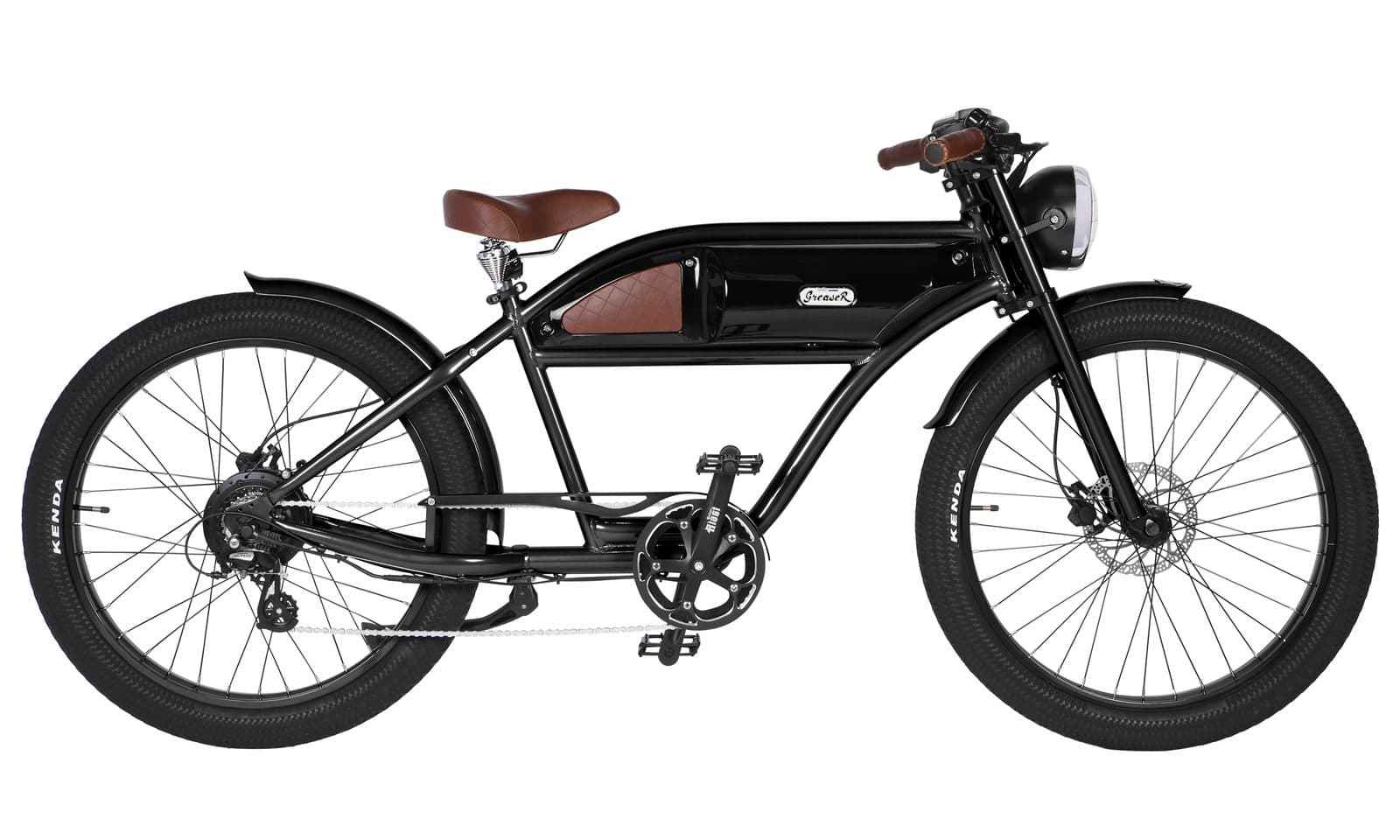
Michael Blast Greaser Classic — Today
The Modern Board Tracker
Ready to ride the legend?
The Greaser. Available in Classic and Springer variants, in multiple colourways. Ships free across Canada and the US.
Explore the Greaser